How to Care for Snake Plants Indoors and Outdoors
Snake plants are one of those plants that make a room look instantly more pulled together—without asking for much in return. Their tall, architectural leaves work beautifully in a living-room corner, on a patio, or tucked into a small pot on a shelf, and they are especially forgiving if you occasionally forget to water them.
If you love low-maintenance greenery, succulents, or easy container-garden ideas, a snake plant is a great place to start. Here’s how to care for snake plants indoors and outdoors, including watering, light, soil, pot ideas, and a few favorite varieties.
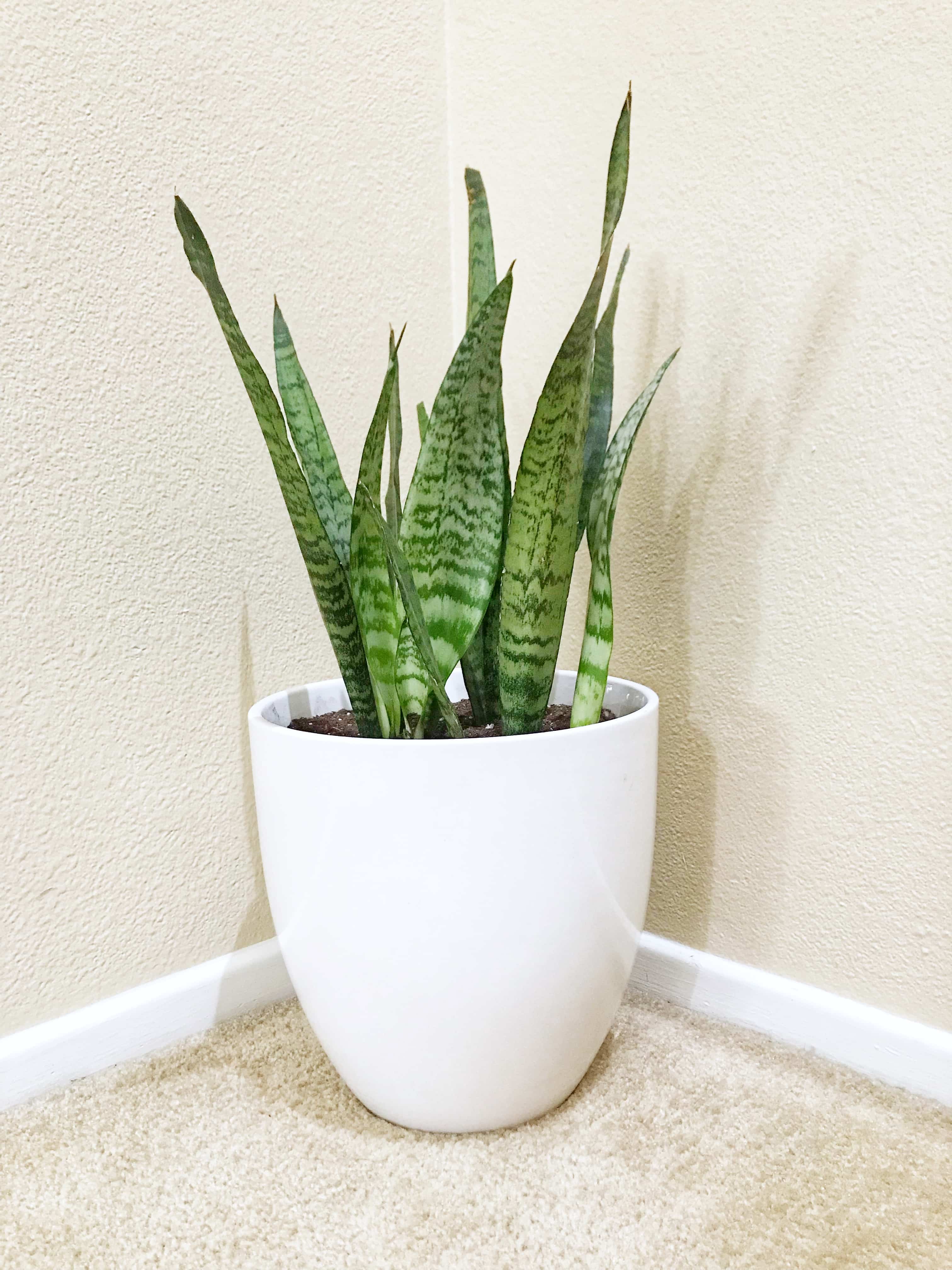
Snake Plant Care at a Glance
- Light: Low light to bright, indirect light
- Water: Only once the soil has dried out completely
- Soil: Fast-draining cactus or succulent soil
- Temperature: Keep above 50°F
- Humidity: Average household humidity is perfect
- Fertilizer: Optional; feed lightly in spring and summer
Snake plants are often still called Sansevieria, though their botanical name is now Dracaena trifasciata. No matter what name you use, the care is the same: give them a well-draining pot, don’t overwater, and they will be happy.
How Much Light Do Snake Plants Need?
Snake plants are known for tolerating lower light, which is why they are such a popular indoor plant. They can survive in a dimmer corner, but they will grow more slowly there.
For the healthiest growth, place yours in bright, indirect light near a window. A few hours of gentle morning sun is usually fine, too. Variegated snake plants—the ones with yellow edges or lighter striping—especially benefit from brighter light to keep their coloring crisp.
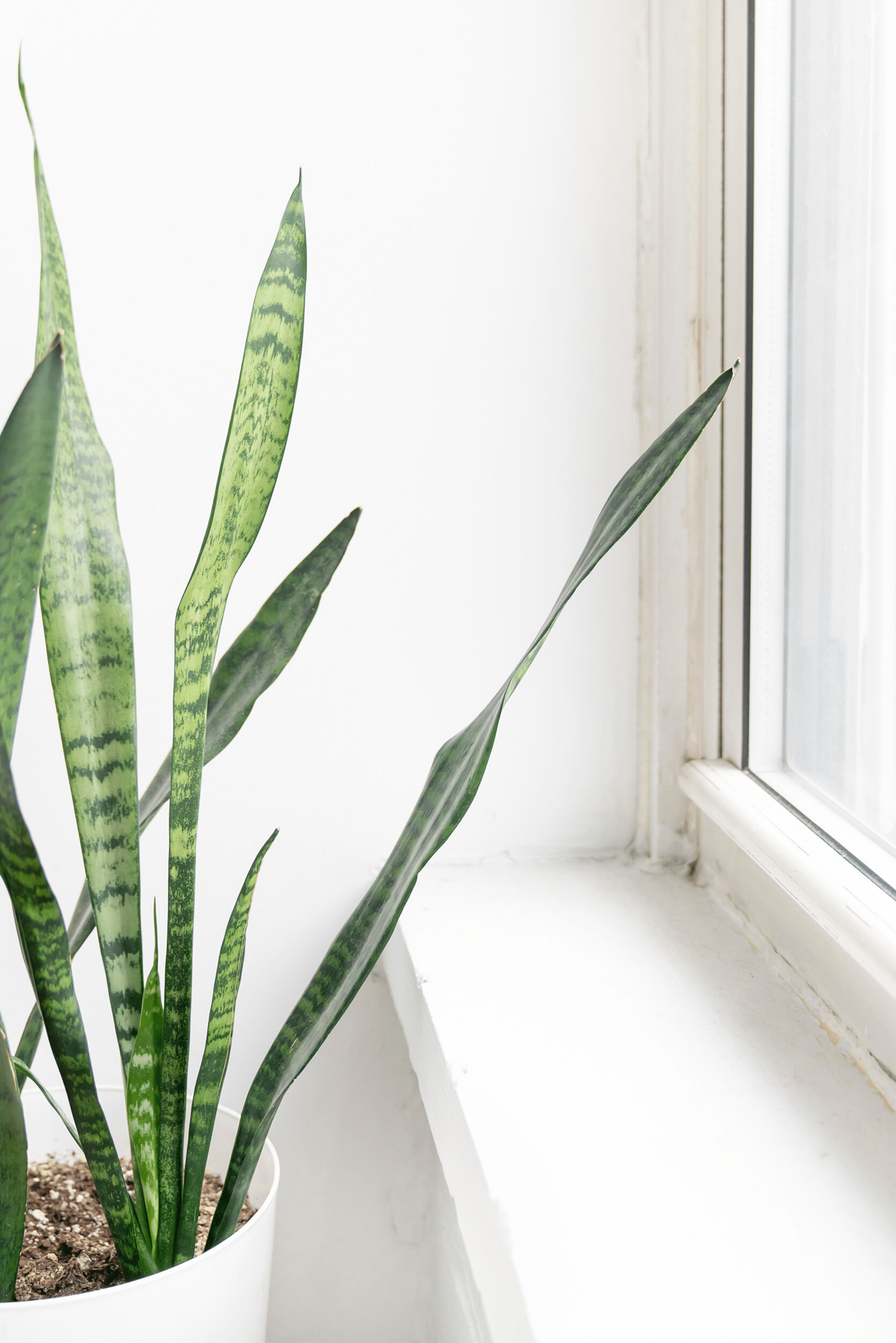
Outdoors, snake plants do best in bright shade, filtered light, or morning sun. Hot afternoon sun can scorch the leaves, especially if the plant has been growing indoors and is suddenly moved outside. If you are transitioning it to your patio, introduce it gradually over a week or two.
How Often Should You Water a Snake Plant?
The quickest way to hurt a snake plant is watering it too often.
Snake plants store water in their thick leaves, much like many succulents, so they prefer their soil to dry out fully between waterings. For many indoor plants, this might mean watering every two to four weeks. In winter, it may be even less often.
Instead of watering on a calendar, check the soil first. Stick your finger a couple of inches into the pot, or use a wooden chopstick to check deeper near the roots. If the soil still feels damp, wait.
When it is time to water, soak the soil thoroughly until water runs out of the drainage hole. Then empty the saucer so the pot is never sitting in water.
Signs of overwatering
- Yellow or soft leaves
- Leaves that feel mushy near the base
- Soil that stays wet for a long time
- A musty smell from the pot
- Roots that are brown, soft, or rotting
Signs your snake plant needs water
- Leaves starting to wrinkle or pucker
- Very dry, dusty soil
- Slight curling or inward folding of leaves
A snake plant can recover much more easily from being a little too dry than from soggy roots.
The Best Soil for Snake Plants
Use a soil mix that drains quickly. A cactus or succulent potting mix is an easy choice and works well for snake plants.
If you already have regular potting soil, you can improve it by mixing in perlite or pumice. The goal is to create a looser mix that lets water move through instead of lingering around the roots.
Heavy, moisture-holding soil is usually what causes root rot—not the plant itself being “picky.”
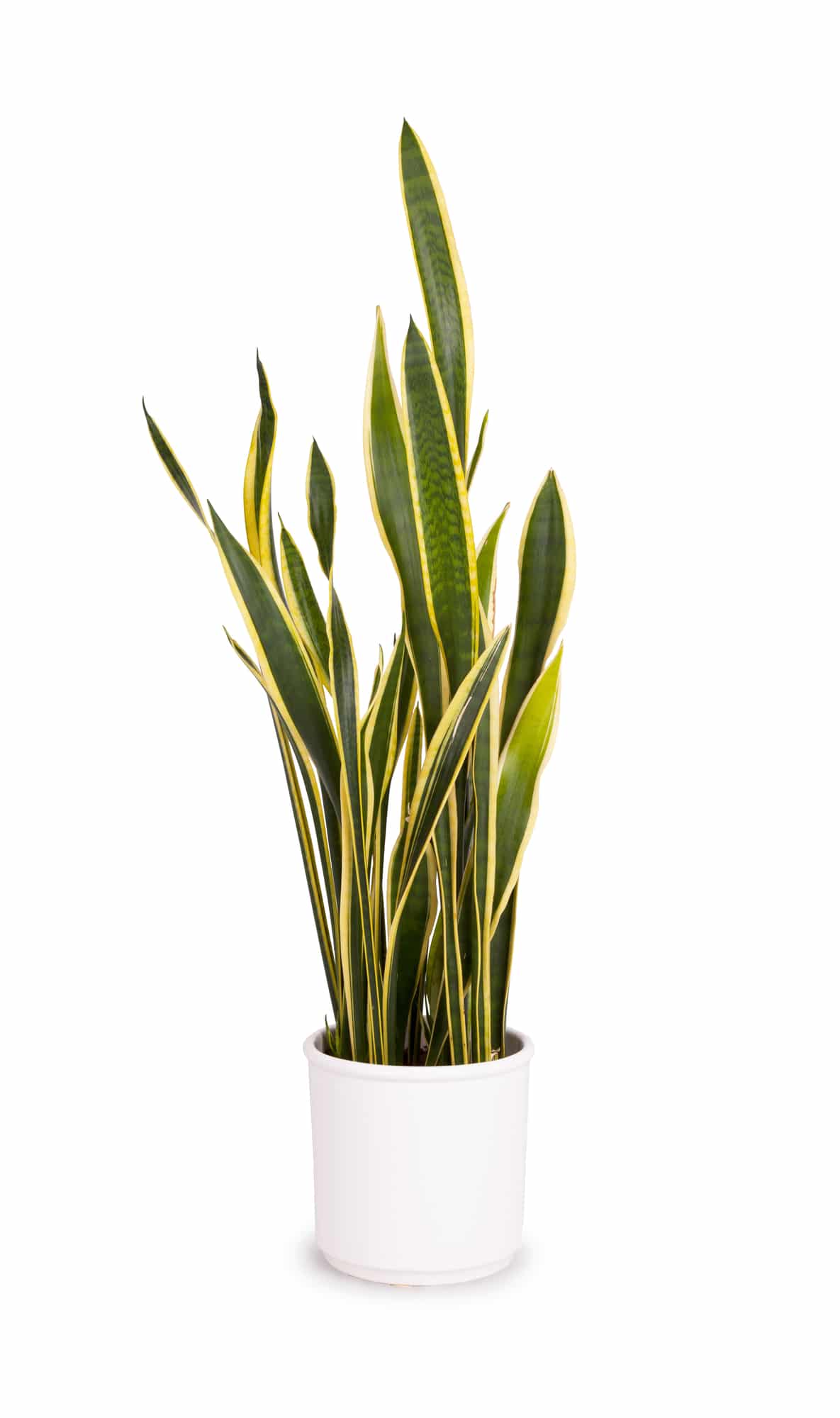
The Best Pots for Snake Plants
A pot with a drainage hole is non-negotiable for snake plants. Even the prettiest planter can cause problems if excess water has nowhere to go.
Terracotta is especially nice for snake plants because it helps soil dry out more quickly. Ceramic, plastic, and fiberglass pots can work well too, as long as they drain properly.
Snake plants actually like being a little snug in their pots, so there is no need to size up too quickly. Choose a container only one to two inches wider when you repot.
Snake plant pot ideas
- A tall floor planter beside a sofa, entryway console, or bedroom dresser
- A small white ceramic pot on a kitchen shelf or desk
- A matte black planter for a modern, sculptural look
- A pair of matching snake plants framing a fireplace or doorway
- A patio planter mixed with trailing succulents or drought-tolerant plants
- A compact bird’s nest snake plant in a low bowl as part of a succulent arrangement
Their upright shape makes them especially useful when you want greenery without taking up much surface space.
How to Care for Snake Plants Outdoors
Snake plants can be grown outdoors in warm climates, but they do not tolerate frost. If temperatures in your area fall below about 50°F, keep them in pots so you can bring them inside before cooler weather arrives.
Place outdoor snake plants somewhere with bright shade, dappled light, or gentle morning sunshine. Avoid a spot that gets intense afternoon sun, particularly in hot climates.
Outdoor plants may need water more often during a stretch of heat, but the same rule applies: let the soil dry out completely first. If your area gets frequent rain, make sure your pot drains very well and move it under cover if the soil is staying soaked.
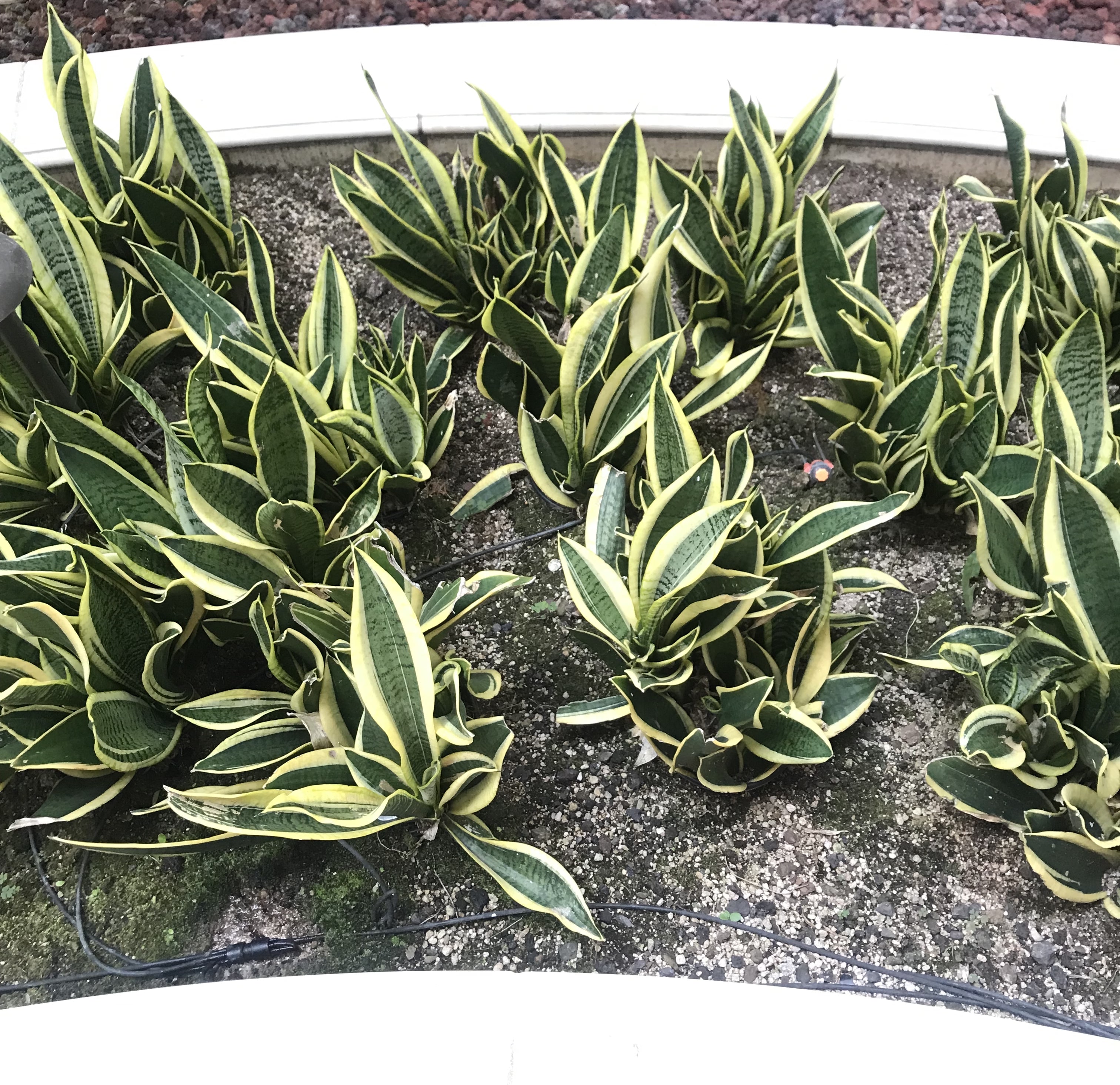
Popular Snake Plant Varieties
There are so many beautiful snake plant varieties now that it is easy to collect more than one.
‘Laurentii’
This is the classic snake plant with tall green leaves and bright yellow edges. It looks lovely in a larger floor pot and adds height to a room quickly.
‘Zeylanica’
A deep green variety with subtle, silvery striping. It has a softer look than ‘Laurentii’ but still gives you that classic upright snake plant shape.
‘Moonshine’
‘Moonshine’ has pale, silvery-green leaves that feel especially pretty in light, modern spaces. Give it brighter indirect light to help preserve that soft coloring.
Bird’s Nest Snake Plant
Also called Hahnii, this compact variety grows in a short rosette shape instead of tall blades. It is perfect for small pots, coffee tables, shelves, and succulent arrangements.
Whale Fin Snake Plant
This dramatic variety has large, paddle-shaped leaves. A single leaf in a simple pot can make a statement on a console or side table.
Cylindrical Snake Plant
With rounded, spear-like leaves, this variety has a more sculptural appearance. It works beautifully in modern planters and often appears in indoor plant displays.
When to Repot a Snake Plant
Snake plants are slow growers, so you usually only need to repot every two to three years.
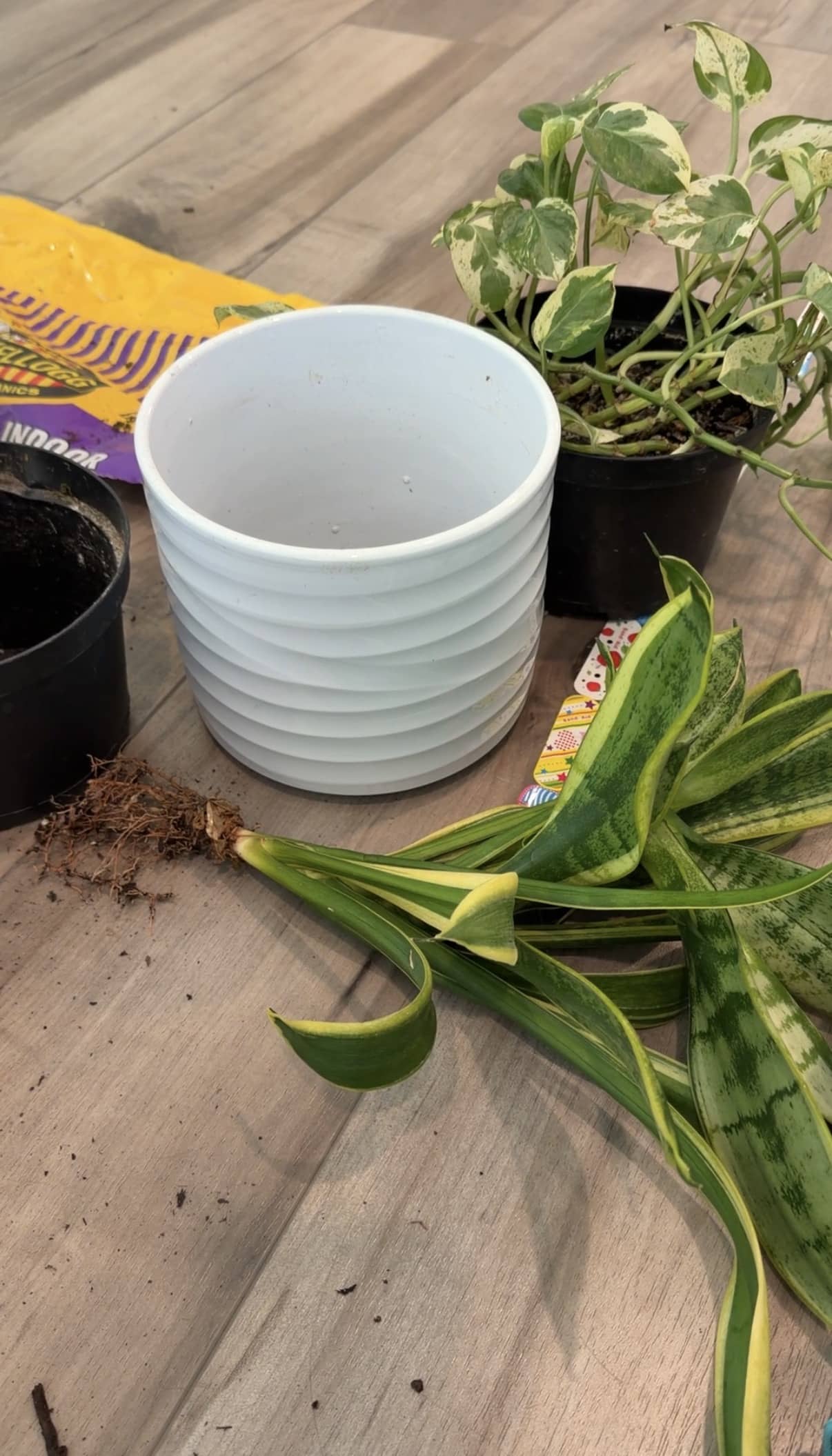
It is time to repot if roots are filling the pot, pushing the plant upward, growing through the drainage hole, or causing the container to crack. Choose a pot only slightly larger than the current one and use fresh, well-draining soil.
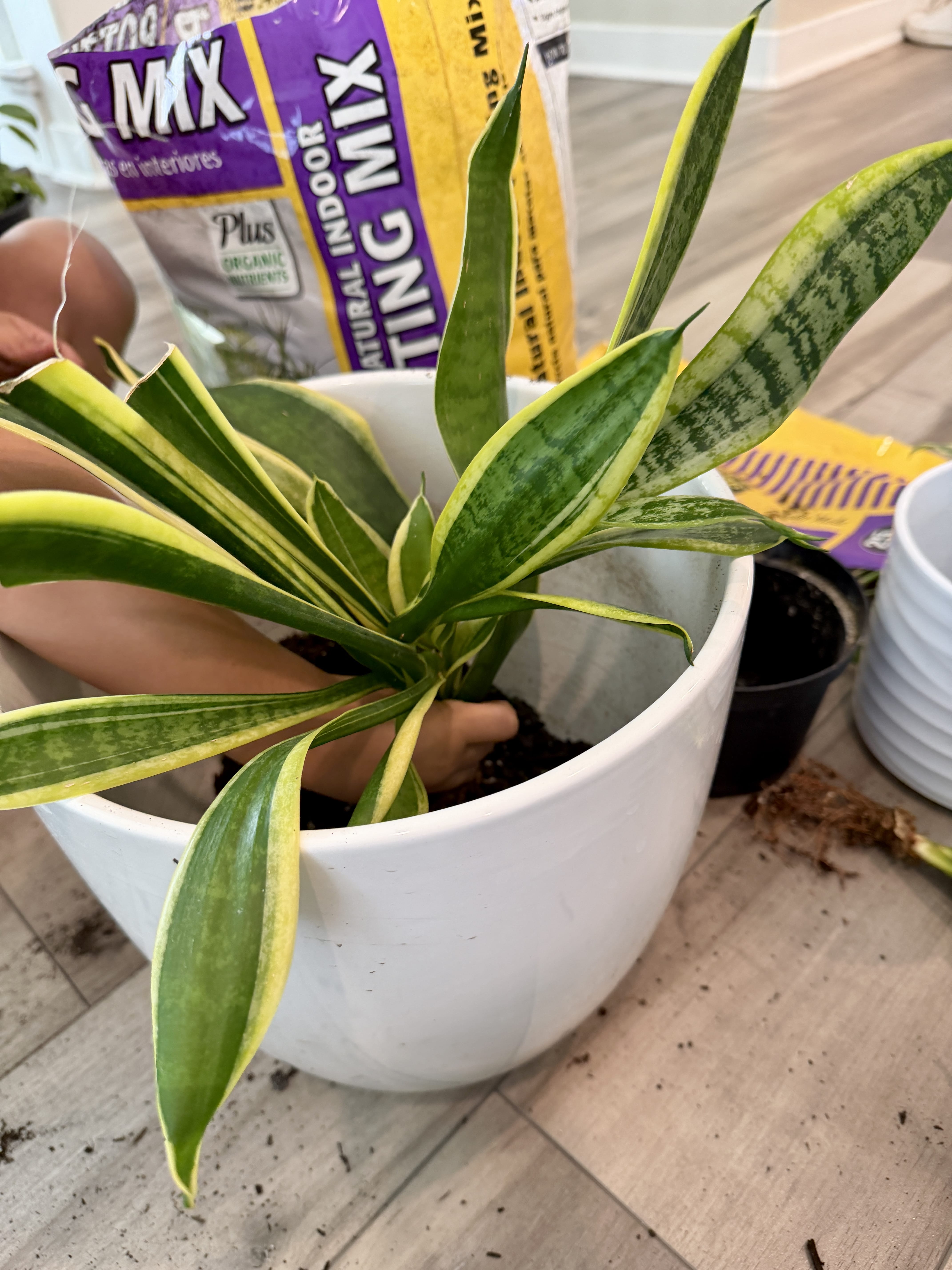
After repotting, wait a few days before watering. This gives any disturbed roots time to settle and lowers the chance of rot.
Common Snake Plant Problems
Why are my snake plant leaves turning yellow?
Yellow leaves are usually caused by overwatering. Let the soil dry out, check that the pot has drainage, and inspect the roots if the plant is very soft at the base.
Why are the leaf tips brown?
Brown tips can come from underwatering, inconsistent watering, mineral buildup from tap water, or cold drafts. Trim off the brown portion with clean scissors if you would like, following the natural shape of the leaf.
Why are the leaves falling over?
This can happen when a snake plant is overwatered and the roots are struggling. It can also happen if the plant is in a pot that is much too large or if it is not getting enough light.
Why is my variegated snake plant losing its color?
It likely needs brighter light. Move it closer to a window with indirect light and give it a few weeks to adjust.
Are Snake Plants Safe Around Pets?
Snake plants are mildly toxic if chewed by cats or dogs and may cause stomach upset. If you have a pet that likes to nibble leaves, keep the plant on a high shelf or choose a pet-safe alternative.
Snake plants are one of the easiest ways to add lasting greenery indoors or on a patio. Give yours a pot with drainage, use fast-draining soil, keep it in low to bright indirect light, and be patient before watering again.
If there is one thing to remember, it is this: snake plants would almost always rather be too dry than too wet.