How to Read More Books: 10 Simple Ways to Make Reading a Habit
I’ve always been a reader.
I studied English literature in college, worked in publishing after graduation, and have spent more hours than I can count wandering bookstores and adding books to an ever-growing reading list.
But loving books and actually making time to read them are two very different things.
There have been seasons of my life when I could finish a novel in a few days—and others when I’d realize I hadn’t picked up a book in weeks.
If you want to read more books but feel like you never have enough time, you probably don’t need to become a faster reader. You need to make reading easier to fit into the life you already have.
These are the habits that have helped me do exactly that.
1. Stop Waiting Until You Have “Enough” Time to Read
One of the biggest changes I’ve made is letting go of the idea that reading requires an uninterrupted hour and a perfectly quiet room.
Ten minutes counts.
So does reading five pages while you drink your morning coffee or a chapter before you go to sleep.
A few small reading sessions throughout the day can add up surprisingly quickly. If you read just 10 pages a day, that’s roughly 300 pages a month—the length of an entire novel.
Instead of asking, When do I have an hour to read?, look for the little pockets of time you already have.
2. Keep a Book Within Reach

Make reading the easy option.
Keep your current book on your nightstand, next to your favorite chair, or wherever you normally drink your coffee. Carry a Kindle or book in your bag when you leave the house.
The fewer steps between you and your book, the more likely you are to actually pick it up.
This also gives you an alternative to automatically reaching for your phone whenever you have ten minutes to spare.
3. Read Books You Actually Want to Read
This sounds obvious, but I think it’s one of the most important pieces of reading advice.
You don’t have to read a book simply because everyone else is reading it.
You don’t have to read the classics.
And you definitely don’t have to finish something you’re dreading every time you pick it up.
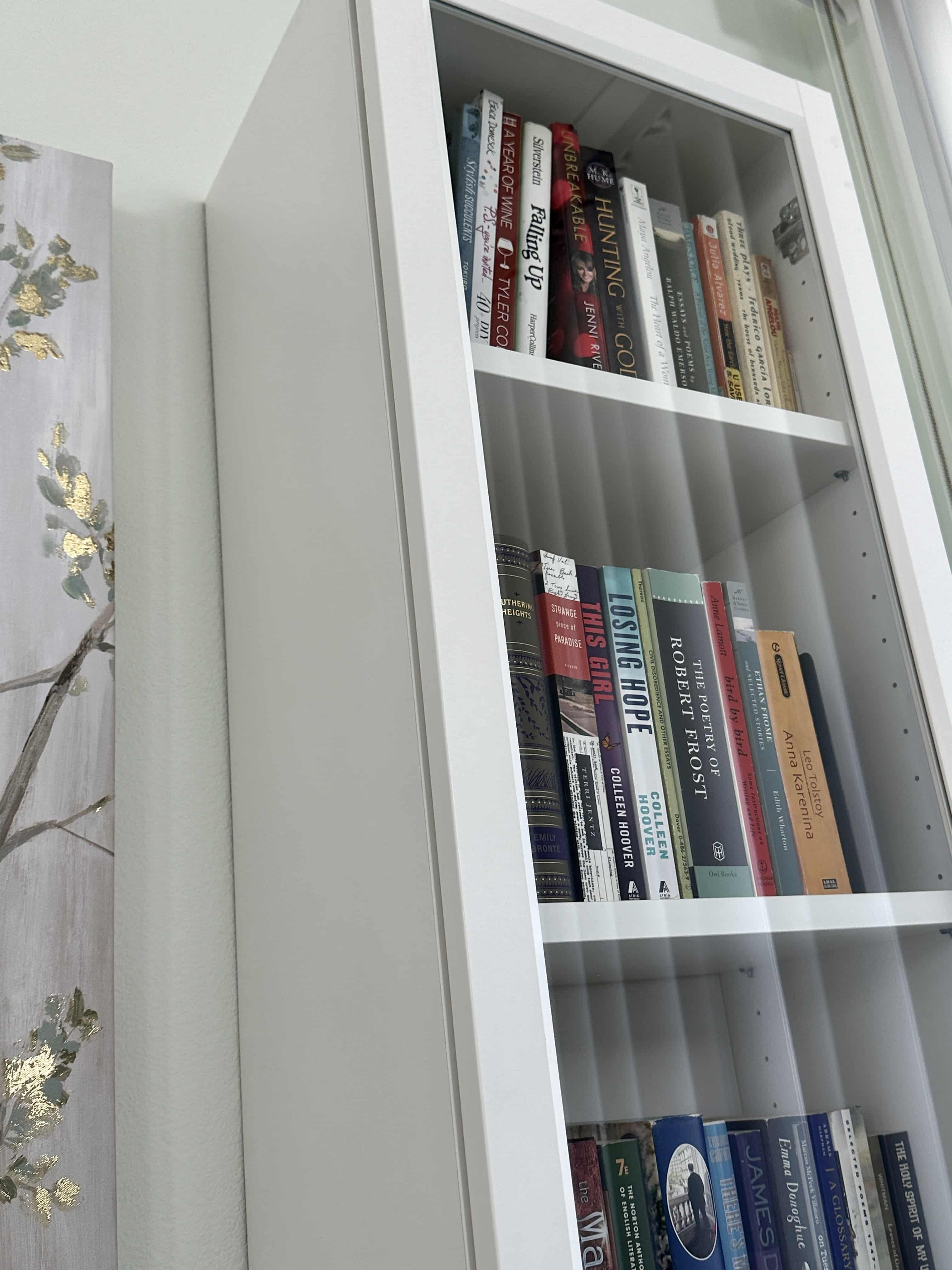
I love classic literature—Anna Karenina is still one of my favorite books—but there are seasons when a 700-page Russian novel simply isn’t what I’m going to reach for.
Sometimes the book that gets you reading again is a fast-paced thriller, a romance you finish in two nights, or an old favorite you’ve already read three times.
Reading more becomes much easier when you can’t wait to get back to your book.
4. Give Yourself Permission to Stop Reading a Book
This deserves its own rule.
If you’ve given a book a fair chance and still don’t care what happens next, put it down.
There are far too many wonderful books in the world to spend weeks forcing yourself through one you don’t enjoy.
A book you’re avoiding can turn into a reading slump surprisingly quickly.
Move on.
You can always come back to it later.
5. Replace a Little of Your Scrolling Time With Reading
You don’t need to give up social media or throw your phone across the room.

Just steal back a little of that time.
If you normally scroll for 30 minutes before bed, try reading for the first 15.
If you automatically reach for your phone while waiting somewhere, open your Kindle app instead.
The goal isn’t to become perfectly disciplined. It’s simply to make books one of the things you instinctively reach for when you have downtime.
6. Create a Reading Ritual You Look Forward To
Reading doesn’t have to feel like another item on your productivity list.

Make it something you genuinely look forward to.
Maybe that’s reading in bed with your Kindle, making coffee and reading a chapter before everyone else wakes up, or settling into a comfortable chair after dinner.
I love the idea of creating a little atmosphere around reading: a comfortable chair, good lighting, a blanket, coffee or tea, and your current book.
A beautiful reading nook isn’t required, of course. But making reading feel pleasurable rather than obligatory can make you much more likely to return to it every day.
7. Try a Kindle or E-Reader
I love physical books, but my Kindle has probably helped me read more than almost anything else.
It’s especially useful at night because I don’t need to turn on a lamp or flip pages. When my son was an infant, I could read quietly beside him at night without disturbing him.
An e-reader also means you can carry an entire library with you.
And if you don’t own one, you can use a reading app on your phone for those little pockets of time when you don’t have a physical book nearby.
8. Listen to Audiobooks
Audiobooks count.
Reading doesn’t have to mean sitting in a chair looking at printed pages.
Listen while you’re walking, driving, folding laundry, cleaning the kitchen, or doing something else that doesn’t require your full attention.
You can even combine formats—listen to the audiobook during the day and pick up the physical or digital copy at night.
This is one of the easiest ways to fit more books into a busy life.
9. Keep a Reading List
One surprisingly common reason people stop reading is that they finish a book…and have no idea what to read next.
Keep a running list of books that sound interesting.
I like having several possibilities rather than creating a rigid reading schedule. That way I can choose whatever fits my mood when I finish my current book.
You could keep your list in a notebook, your phone, Goodreads, StoryGraph, or wherever you’ll actually use it.
And don’t be afraid to keep your list varied. A mystery, romance, classic, memoir, and cozy seasonal read can all happily coexist on the same TBR.
10. Set a Reading Goal—but Don’t Let It Ruin Reading
Reading goals can be incredibly motivating.
You might aim to read:
- 12 books this year
- one book a month
- 20 pages a day
- 30 minutes before bed
- or simply more books than you read last year.
I personally like having a goal because it gives me something to work toward.
But the number isn’t really the point.
If you’re rushing through books simply so you can add another title to your tracker, the goal has stopped serving you.
Reading isn’t a race.
How Many Books Can You Realistically Read in a Year?
You might be surprised by what small amounts of consistent reading can accomplish.
If you average roughly one book per month, you’ll finish 12 books a year.
One book every two weeks gets you to about 26 books.
And one book a week is 52 books in a year.
But I wouldn’t start with 52 simply because it sounds impressive.
Start with a goal that fits your life now. You can always increase it later.
The Easiest Way to Read More Books
If I had to boil all of this down to one piece of advice, it would be this:
Make reading easier to start.
Keep a book nearby. Choose books you’re excited about. Read for ten minutes instead of waiting for an hour. Download an audiobook. Abandon books you’re not enjoying.
The goal isn’t to become someone who can say they read 100 books this year.
It’s to make books part of your everyday life again.
And once reading becomes something you naturally reach for—not something you feel like you should be doing—you may be surprised by how many books you actually finish.